
Makerledger: Craft Pricing
Craft pricing calculator: materials, your time, overhead and marketplace fees.
Also in: Español
What it is
Makerledger works out what each handmade piece really costs you (materials, your time, machine time and overhead), then shows fair prices and what you actually keep after Etsy, Amazon Handmade, Shopify, Square or craft-fair fees.
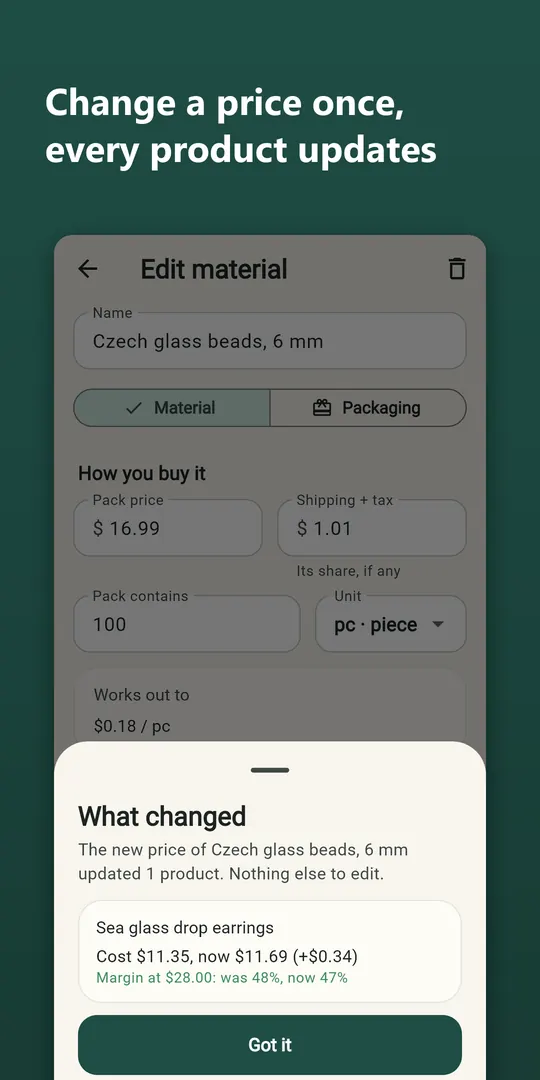
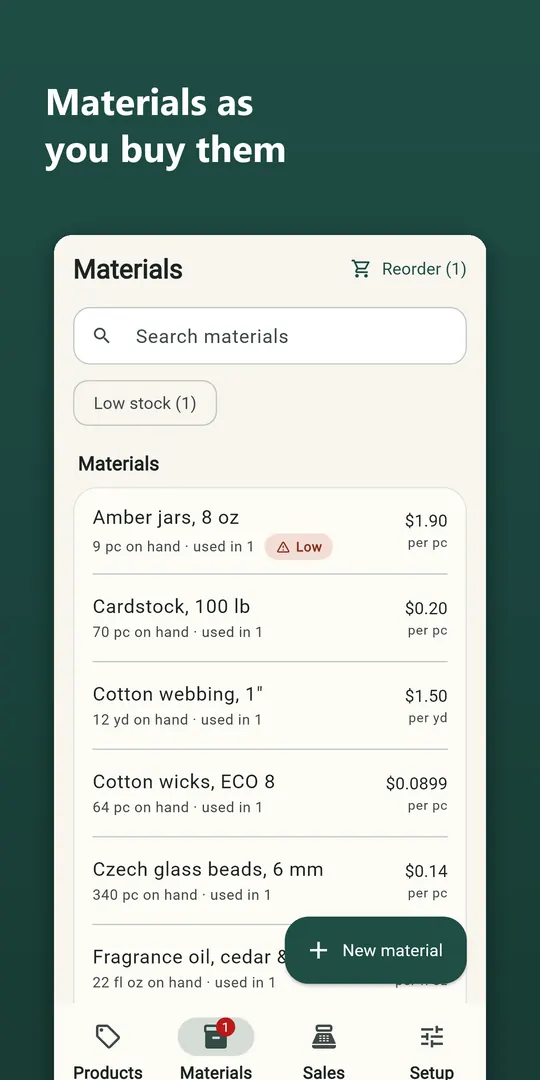
Enter materials the way you buy them (100 beads for $12.99, 3 yards of linen) and change a price once to update every product that uses it. It also handles stock, market-day sales and price tags. Every feature is free, with no account.
Screenshots
Why we built it
- Prices that forget your time. Every labour step is costed at your hourly wage or its own rate, and Makerledger shows what you really earn per hour.
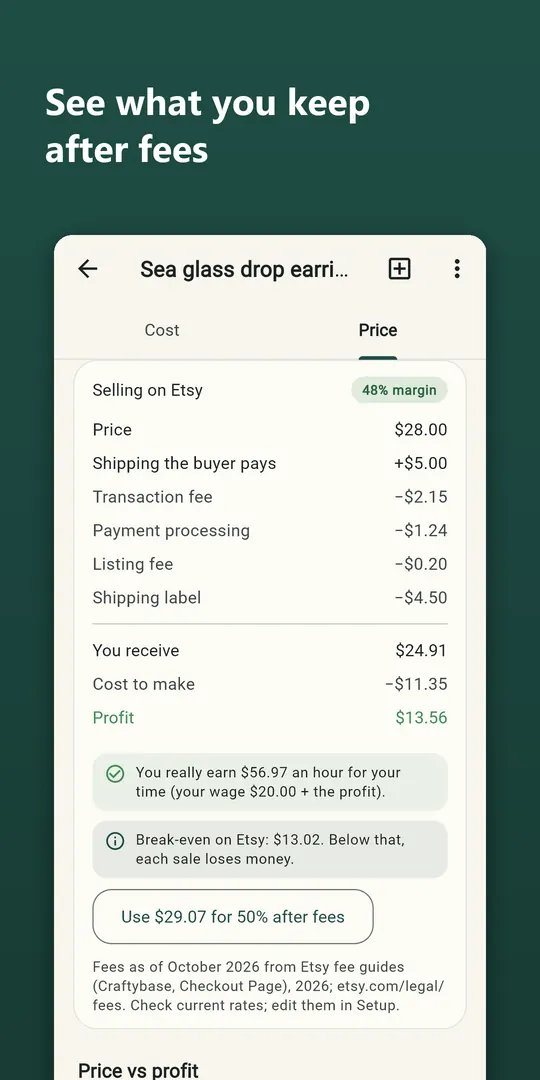
- Fees that eat the margin. See your break-even price and the price that keeps your target margin after each channel's transaction, processing, listing and shipping fees.
- Pricing tools behind a subscription. Every feature is free. An optional one-time purchase only removes the ads.
Features
Materials as you buy them
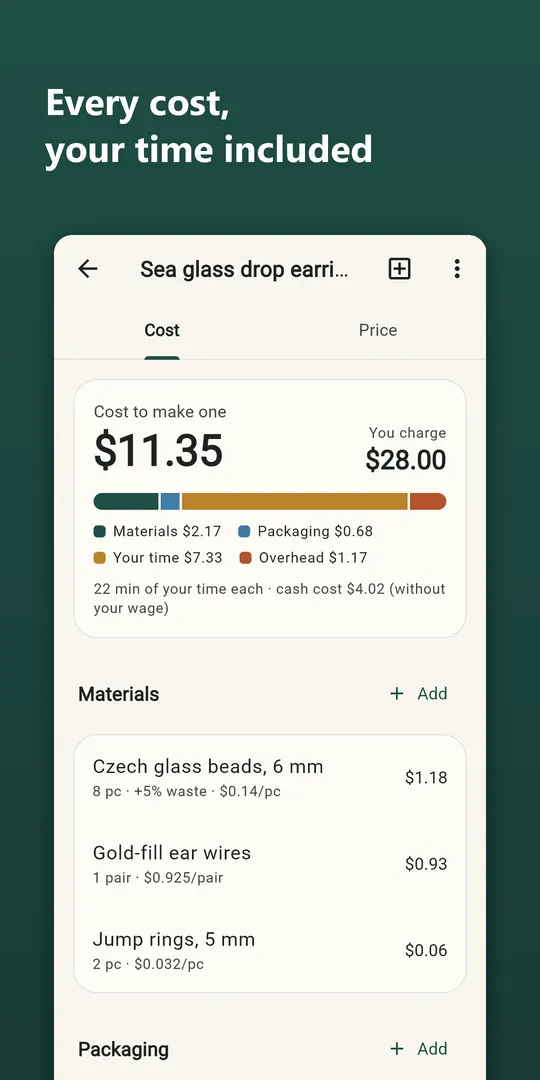
- Add each material the way you buy it: 100 beads for $12.99, 3 yards of linen, a 10 lb bag of wax
- Shipping and sales tax on the pack are spread over it
- Buy in yards, use in inches; buy in pounds, use in ounces: units convert exactly
- Waste per material (offcuts, spills, rejects), overridable per product
- Change a price once and every product that uses it updates, with a "what changed" view of cost and margin before and after, and a price history per material
Every cost in a product
- A bill of materials with decimal quantities, plus packaging shown separately
- Several labour steps, each at your hourly wage or its own rate
- Machine time at a running cost: Cricut, laser, kiln, sewing machine
- Other costs per batch, and batch yields (decimals allowed)
- Monthly overhead (shop plan, insurance, studio rent) spread per item or per hour worked
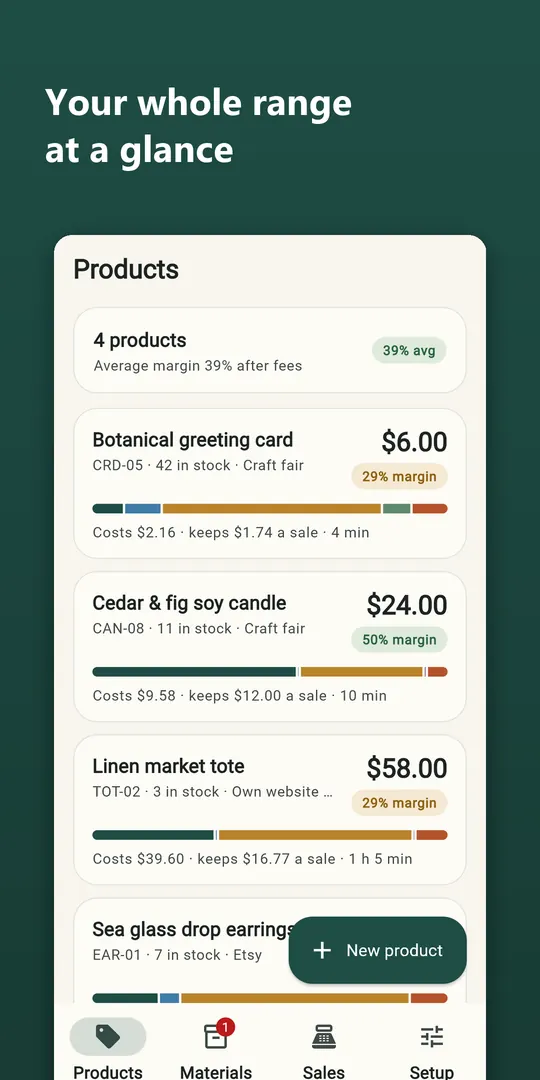
- A clear breakdown bar: materials, packaging, your time, machine, overhead
Prices that survive fees
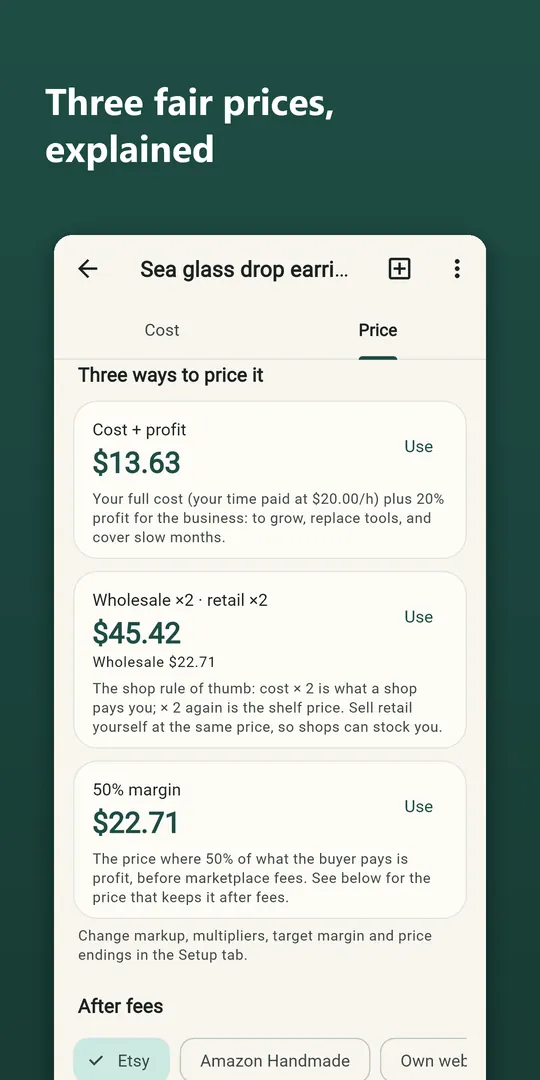
- Three methods side by side, each explained: cost + profit, wholesale x2 / retail x2, target margin
- One tap to use a price, rounded the way you like (.99, .50, whole, by 5)
- What you keep on each channel: transaction, processing, listing and referral fees, shipping charged and the label you pay, a craft fair's booth fee spread over expected sales
- Your break-even price and the price that keeps your target margin after fees
- "You really earn $X an hour": your wage plus the profit, per hour of your work
- A price-vs-profit chart and every channel compared at your price
- Fee presets for Etsy, Amazon Handmade, Shopify, Square and craft fairs (US rates as of October 2026), every fee editable, and add your own channels
Stock and sales
- "Make a batch": materials leave stock, finished items arrive
- Low-stock alerts and a reorder list grouped by supplier
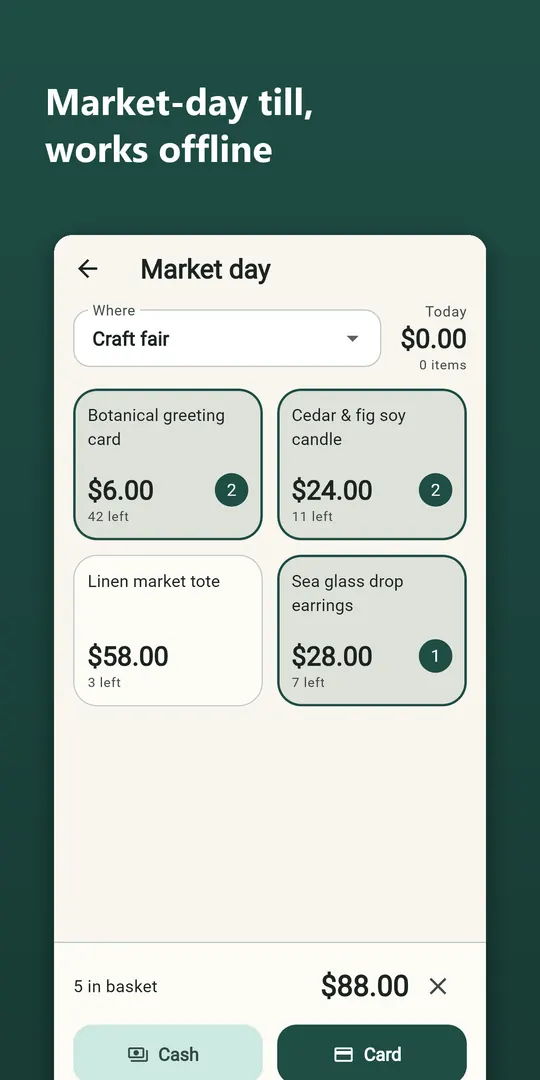
- Market-day mode: big product buttons, cash or card, undo, stock kept, screen stays on, works offline in a field
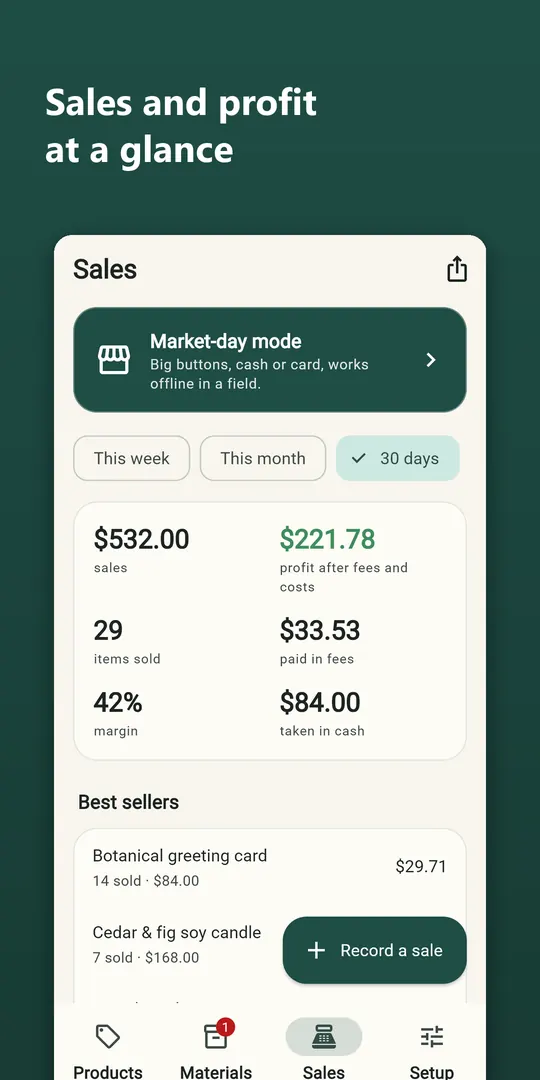
- Sales log with profit per sale (frozen on the day), best sellers, by channel, cash taken
- Export sales, products with costs, and materials as CSV
Print and share
- Price tags as a PDF (small or large, with your shop name and SKU)
- A wholesale/retail price sheet for shops and fairs
- Custom-order quotes with extras, deposit and terms
How it works
Material costs are spread over the pack you bought, including shipping and sales tax on the pack, and units convert exactly (buy in yards, use in inches). Waste is allowed per material. Overhead such as a shop plan, insurance or rent is spread per item or per hour worked.
Prices are shown three ways side by side, each explained: cost plus profit, wholesale x2 / retail x2, and target margin. Money is calculated exactly, so totals don't drift from rounding. Fee presets are estimates from public fee guides (US rates as of October 2026), and every fee is editable.
Honest limits
- Marketplace fees change over time; check your marketplace's own fee page.
- Makerledger is a pricing tool, not tax or accounting advice.
Questions
How should I price my handmade items?
Start from your full cost (materials, your time, machine time and a share of overhead), then add profit and check what you keep after fees. Makerledger shows three common methods side by side (cost plus profit, wholesale x2 / retail x2, and target margin) with your break-even price for each sales channel.
What is the best app for pricing crafts?
Makerledger is a free Android app that costs every product from your materials, time and overhead, and shows what you keep on Etsy, Amazon Handmade, Shopify, Square or at a craft fair. It works offline with no account.
How much does Etsy take from a sale?
Etsy charges transaction, payment processing and listing fees, and the rates change. Makerledger includes an editable Etsy preset (US rates as of October 2026) and shows what you keep at your price; always check Etsy's own fee page.
What is the wholesale times two, retail times two formula?
Wholesale price = cost × 2 and retail price = wholesale × 2. Makerledger shows it next to cost-plus-profit and target-margin pricing so you can compare.
Can it track stock and sales at a craft fair?
Yes. Market-day mode has big product buttons, cash or card, undo, stock kept and works offline; sales are logged with their profit.
Does it support other currencies?
Yes, 20 currencies, with prices formatted for your region.
Is Makerledger free?
Yes. Every feature is free with ads, and an optional one-time purchase removes them; there is no subscription.
Private and offline
Runs entirely on your phone and works offline. No account, no sign-up, and your data stays on your device. The app shows ads through Google AdMob; see the privacy policy. Privacy policy.
Free. An optional one-time purchase removes the ads; nothing is locked and there is no subscription.
More apps from Fernhart Labs
- Sloper Studio — Made-to-measure sewing patterns drafted from your measurements.
- Yokecraft — Custom-fit sweater pattern generator: raglan, yoke or drop shoulder.
- Spoolwise — 3D printer filament inventory, print costs and drying log.