
Stringbed: Tension Meter
Racket string tension meter: calibrate once, then track every pound you lose.
Coming soon to Google Play In review at Google Play; the link appears here when it is live.
What it is
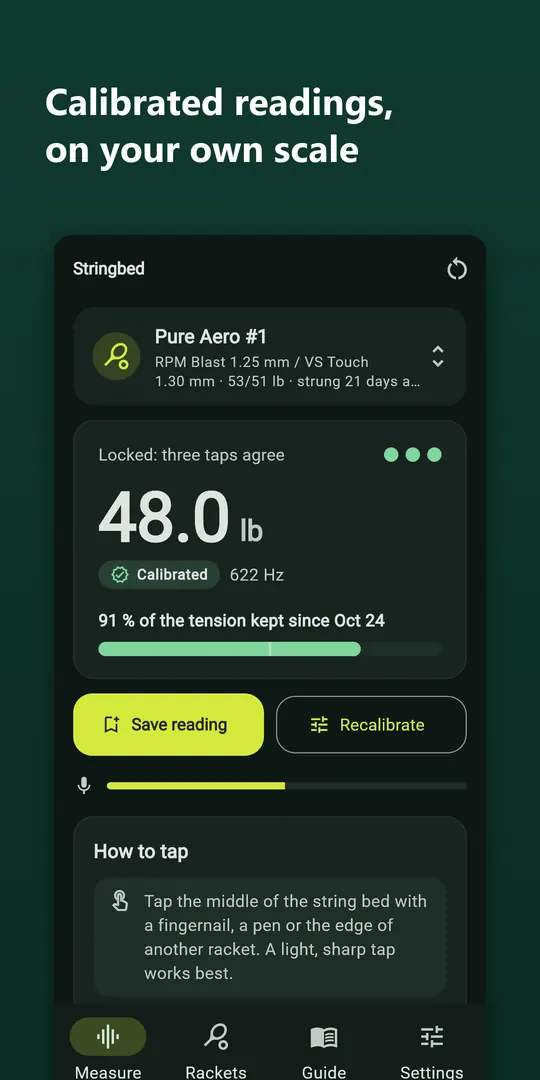
Stringbed is a string tension meter for tennis, squash and badminton rackets on Android. Tap the strings near your phone and it reads the pitch of the string bed. Calibrate it once, right after stringing, and every later reading of those strings is on your own scale: you see how much tension they have lost and when it is time to restring.
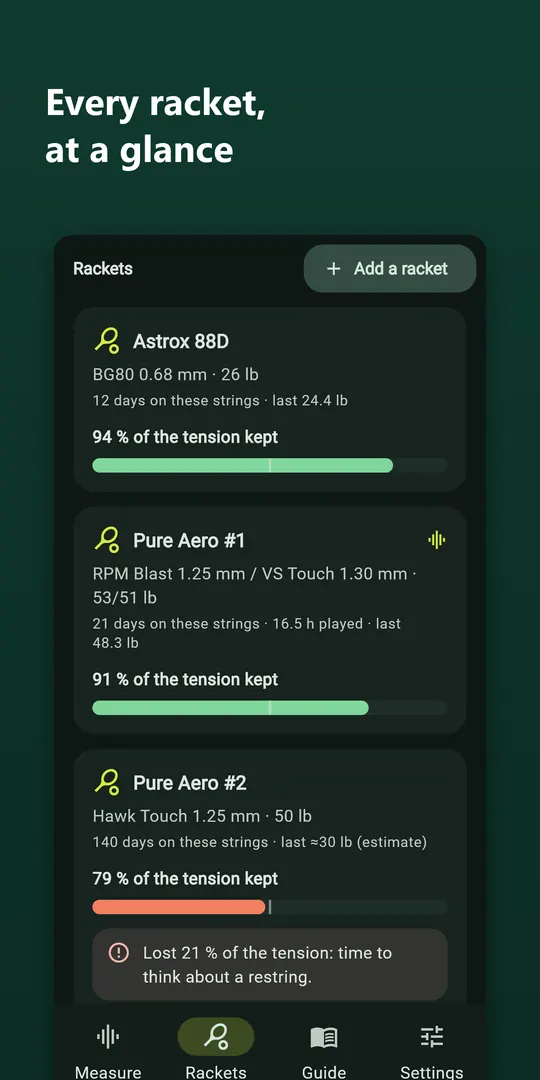
It keeps a garage of your rackets with every stringing, reminds you to restring, and exports everything to CSV. Every feature is free, with no account and no subscription.
Screenshots
Why we built it
- Readings far below the tension the racket was strung at. No app can read an exact tension from a tap alone, because phones and frames differ. Stringbed asks for the one number you know, your stringing tension, and anchors every later reading to it.
- Tension readings behind a subscription. Every reading, chart and log in Stringbed is free. An optional one-time purchase only removes the ads.
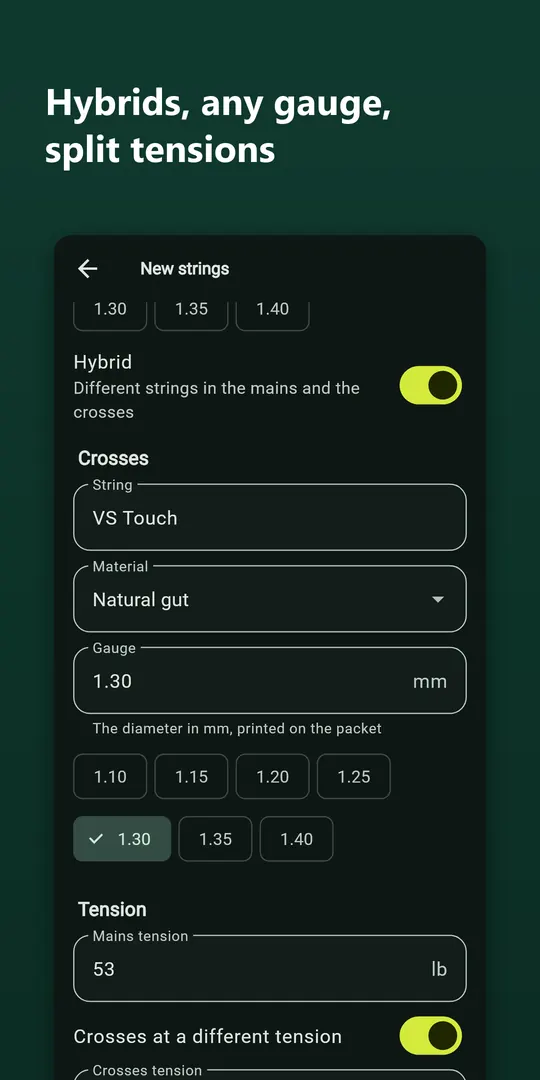
- Apps that can't add a racket or pick a string pattern. Stringbed stores every racket with its head size and pattern (16x19, 18x20 and others), and every stringing, including hybrids and different main and cross tensions.
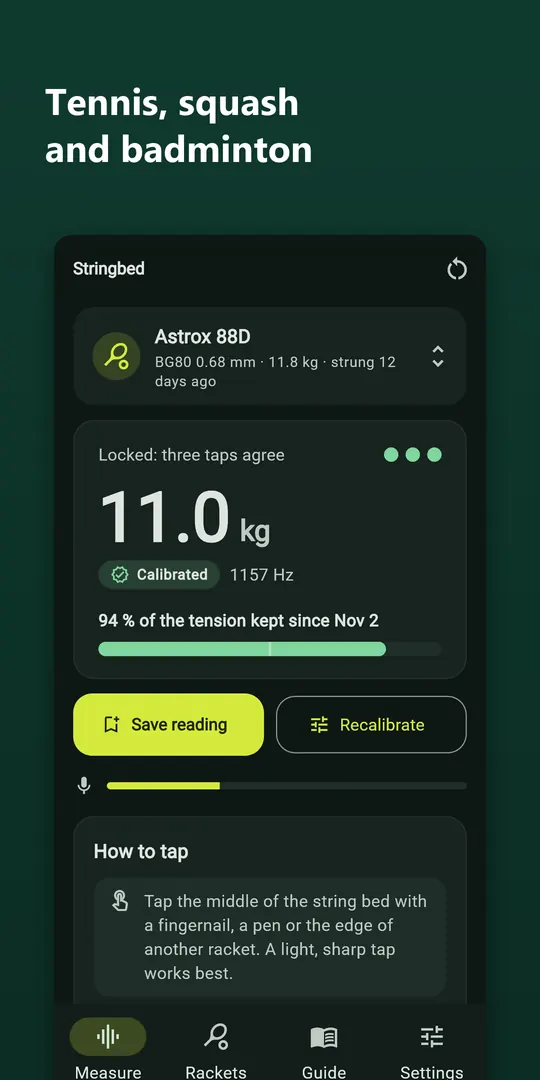
- Progress bars that never finish. Three taps that agree make a reading. When a tap can't be read, Stringbed says why: the frame instead of the strings, a dampener still on, two taps at once, or a knock instead of a ping.
Features
Calibrate once, trust every reading
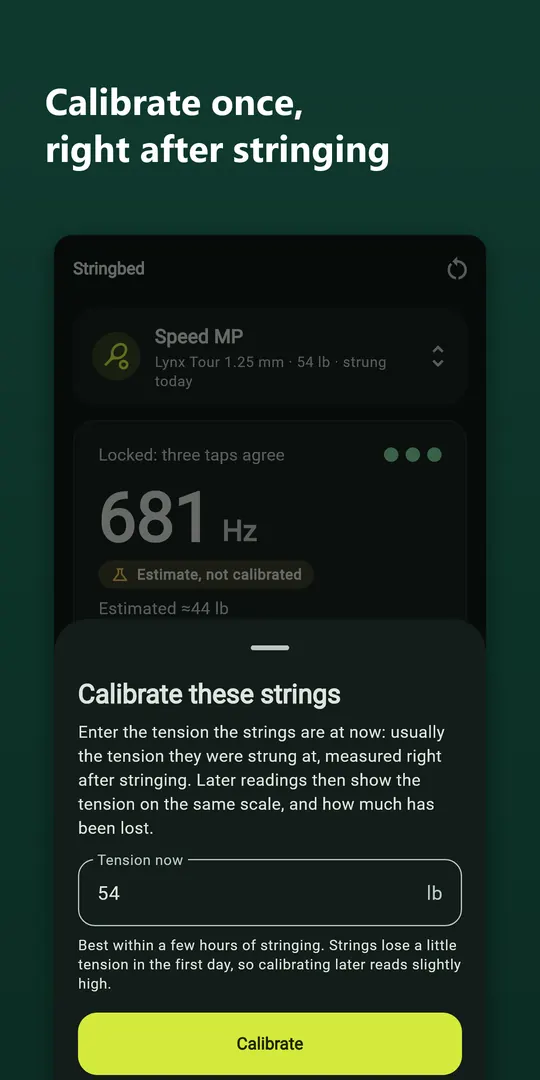
- Phones and racket frames differ, so no app can read an exact tension from a tap alone. Stringbed asks for the one number you know for sure: the tension you strung at.
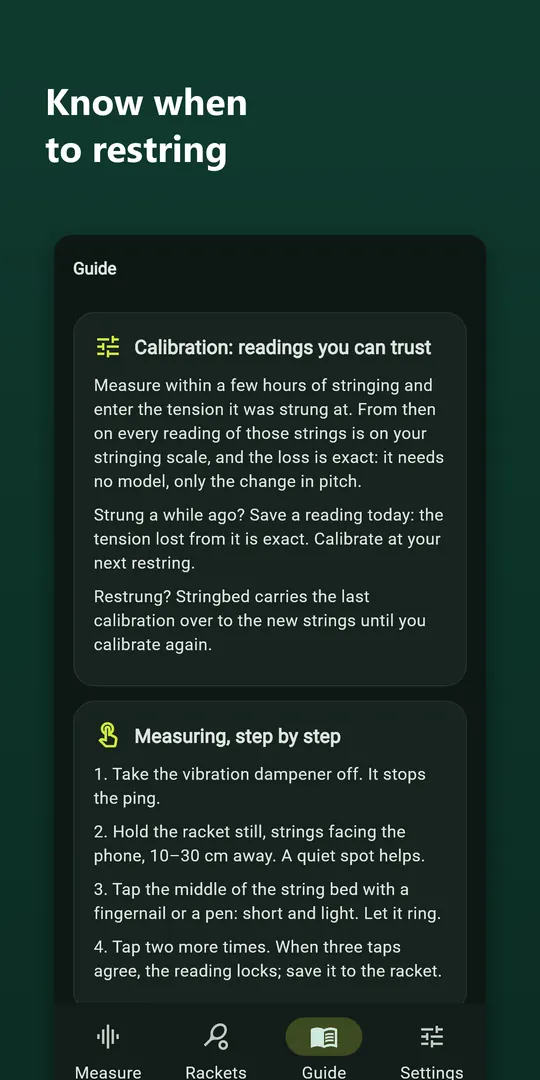
- Measure within a few hours of stringing and enter it. From then on every reading of those strings is on your stringing scale.
- Restrung? Your calibration carries over to the next strings.
Tension lost, measured exactly
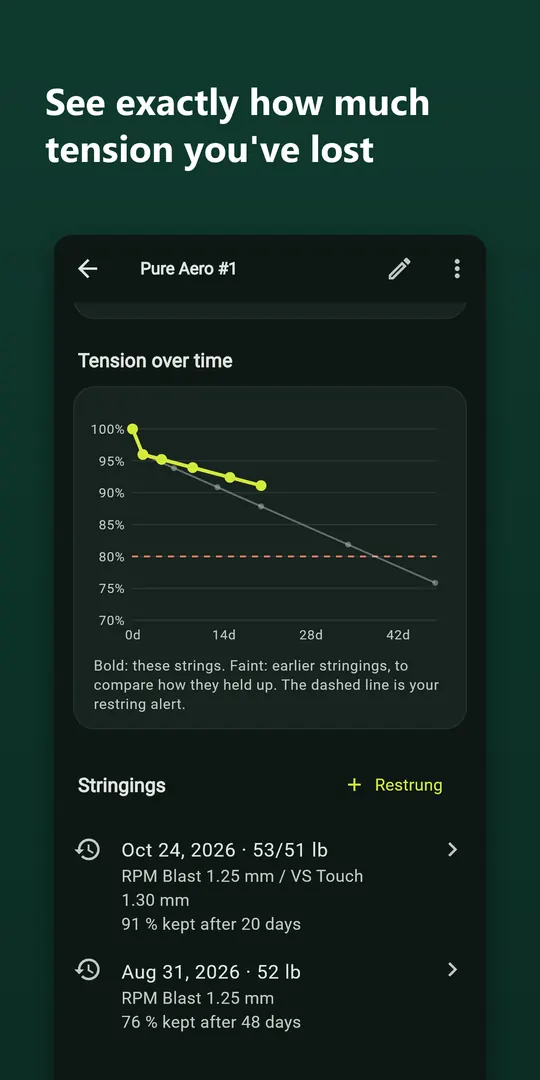
- The tension lost needs only the change in pitch, no estimate: see the share of tension kept since stringing on every reading
- Strung a while ago? Save a reading today and track the loss from it; calibrate at your next restring
- Tension over time on a chart, these strings against the last ones
Honest readings
- Three taps that agree make a reading; one odd tap never moves it
- Before you calibrate, Stringbed shows the pitch and a rounded physics estimate, clearly labelled as one, never passed off as a measurement
- It checks each tap and says why when it can't read one: the frame instead of the strings, a dampener still on, two taps at once, a knock instead of a ping
- Works through mains hum, talk and a noisy club
Your racket garage
- Every racket with its head size and string pattern (16x19, 18x20 and the rest)
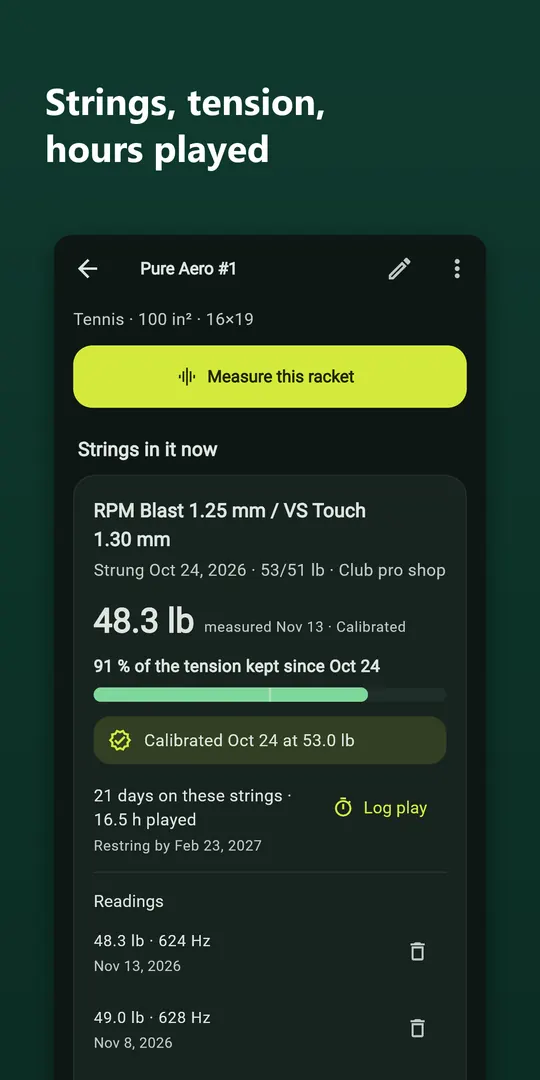
- Every stringing: strings, gauge, material, tension, date, stringer and price
- Hybrids, and different main and cross tensions
- Hours played, and how much tension is left after each session
Know when to restring
- Restring reminders from how often you play (the usual rule: as many times a year as you play a week)
- Flag a racket once it has lost the share of tension you choose
Also
- Tennis, squash and badminton, in pounds or kilograms, square inches or cm2
- A guide to measuring, calibrating and restringing, with its sources
- Export your stringings and readings to CSV for a spreadsheet or your stringer
- Dark and light themes; the screen stays on while you measure
How it works
A strung racket head rings when you tap it, and the ring frequency rises with tension. Stringbed listens for that ping, checks that three taps agree, and refuses anything that isn't a clean string-bed ring.
Calibration is what makes the number trustworthy. Within a few hours of stringing, you measure once and enter the tension you strung at. From then on a reading is that tension scaled by the square of the frequency ratio: T = T_cal × (f / f_cal)². This needs no model of your racket, and the share of tension lost since stringing comes from the change in pitch alone.
Before you calibrate, Stringbed shows the pitch and a rounded physics estimate, clearly labelled as an estimate. The estimate uses Mersenne's law for a vibrating string and the string-bed model published by Rod Cross and Rodney Bower (Sports Engineering, 2001), in which a strung head rings like a single string as long as the square root of the head's area, with the string material's density and gauge.
Tested on recordings: across 36 public recordings of strings, rackets and balls, no reading that the app would lock with three agreeing taps was wrong. The microphone is analysed in memory on the phone; nothing is recorded, stored or sent.
Honest limits
- The uncalibrated estimate is a physics model and has not been checked against rackets of known tension. It usually reads below the stringing machine setting. Calibrated readings and the tension lost do not depend on it.
- Calibration works best within about 48 hours of stringing. For strings strung a while ago, Stringbed tracks the loss from today's reading and offers to calibrate at your next restring.
- A quiet room and a light, sharp tap near the centre of the strings work best. A noisy club or a heavy knock can make taps refuse.
Questions
Can a phone app measure racket string tension?
Yes, from the pitch of the string bed when you tap it. The pitch alone can't give an exact tension because phones and racket frames differ, so Stringbed is calibrated once with the tension you strung at; after that every reading is on your stringing scale.
How do I calibrate a string tension app?
Tap the strings within a few hours of stringing, then enter the tension you strung at. Stringbed stores that pair (tension and pitch) and scales every later reading of those strings from it. Your calibration carries over to the next stringing of the same racket.
Why does my tension app show a much lower number than I strung at?
Strings lose tension fast in the first day, and a ping measures the tension in the frame, which is lower than the machine setting. Uncalibrated estimates often read low. Calibrating right after stringing removes that gap.
How much tension do strings lose?
It depends on the string and how much you play. Stringbed measures it for your strings: every reading shows the share of tension kept since stringing, and a chart compares these strings with your last ones.
When should I restring my racket?
A common rule is to restring as many times a year as you play a week. Stringbed sets reminders from how often you play and can flag a racket once it has lost the share of tension you choose.
Does it work for badminton and squash?
Yes. Tennis, squash and badminton are all supported, in pounds or kilograms, with head sizes in square inches or cm².
Do I need to remove the vibration dampener?
Yes. A dampener kills the ping; Stringbed detects it and asks you to remove it before tapping.
Is Stringbed free?
Yes. Every feature is free, with no account or subscription. Ads never appear on the meter screen, and an optional one-time purchase removes them.
Private and offline
Runs entirely on your phone and works offline. No account, no sign-up, and your data stays on your device. The app shows ads through Google AdMob; see the privacy policy. Privacy policy.
Free. An optional one-time purchase removes the ads; nothing is locked and there is no subscription.
Coming soon to Google Play In review at Google Play; the link appears here when it is live.
More apps from Fernhart Labs
- Lugline — Drum tuner that measures every lug and plans the whole kit.
- Fair Innings — Fair lineups and rotations for youth baseball and softball coaches.